
“80mm”:
From private to public memoirs in the family film archives of Modena
Credits: Fondo Paltrinieri, Fondazione Home Movies
THE PROJECT
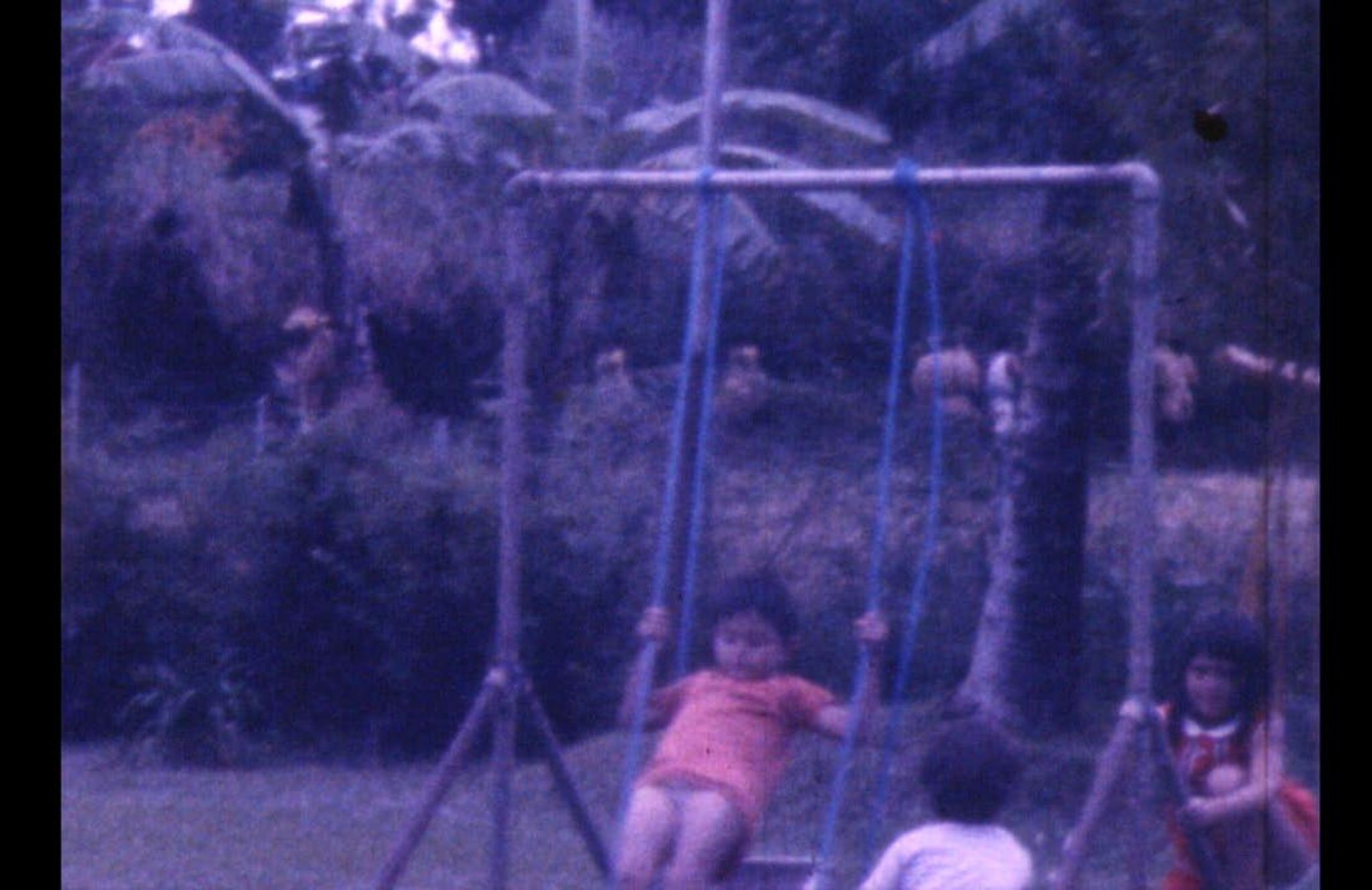
The project “80 MM From private to public memoirs in the family film archives of Modena”, (Alessandra Gribaldo, PI), is supported by the Fondazione di Modena. It aims to collect, map, digitise and analyse the audiovisual memories of the inhabitants of Modena and its province. In particular, the memories of people who, between the 1960s and 1990s, amateurishly filmed moments of family intimacy, landscape sceneries, holiday places and festive occasions. These films, long considered irrelevant for academic research, and mostly left in attics and household drawers, represent special documents. They are treasure of memories and private perspectives on facts and territories, they are archives of family and collective histories.
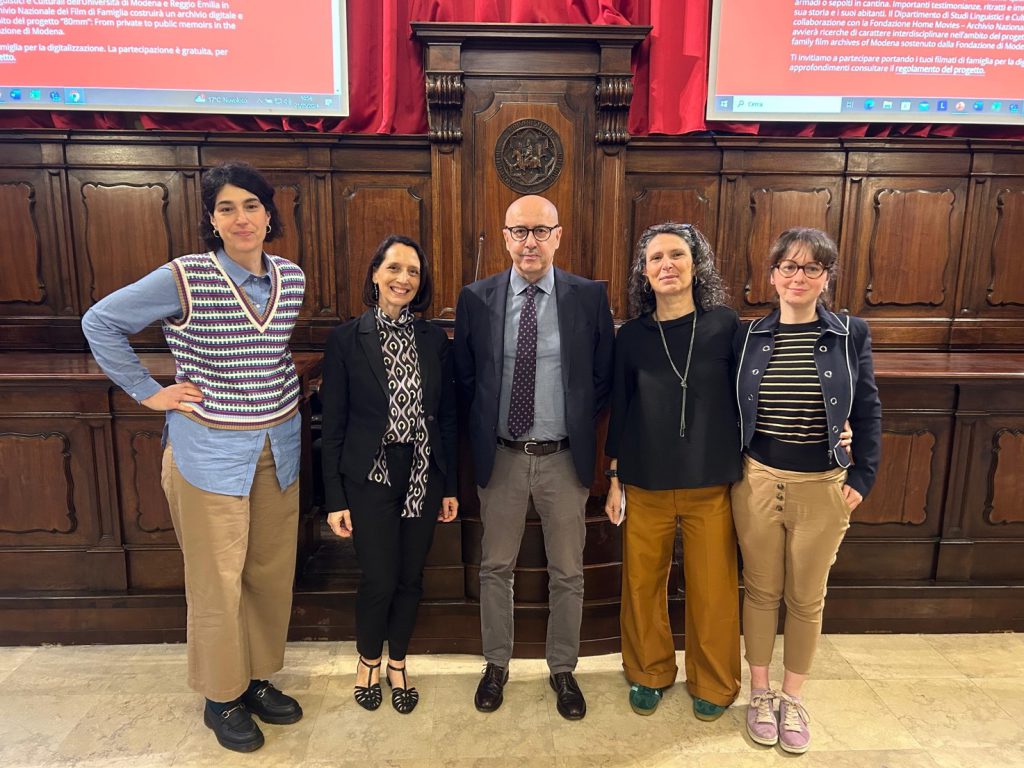
The research team: Alessandra Gribaldo (PI); Selenia Marabello (anthropologist), Lorenzo Bertucelli (historian of contemporaneity), Vittorio Iervese (visual sociologist), Silvia Romio (anthropologist, fellow researcher ), Martina Magri (PhD student in Humanities)
PROMOTION
A fundamental step to collect forgotten audio-visual materials. In the city of Modena and surrounding areas, institutions, cooperatives, cultural associations were contacted, events and conferences were organised, the project and the public call were publicised by means of traditional and new media with the aim of reaching citizens, video lovers and occasional film makers. Important collaborations were established with the Nonantola Municipal Library and the Amigdala Association. Trying to reach possible participants… reaching homes. And so the researchers from the University of Modena distributed leaflets in markets, libraries, bars, but also in hospitals, schools, theatres and bookshops, trying to get the word out in the city’s various districts, both peripheral and central.
THE COLLECTION | May-July 2024
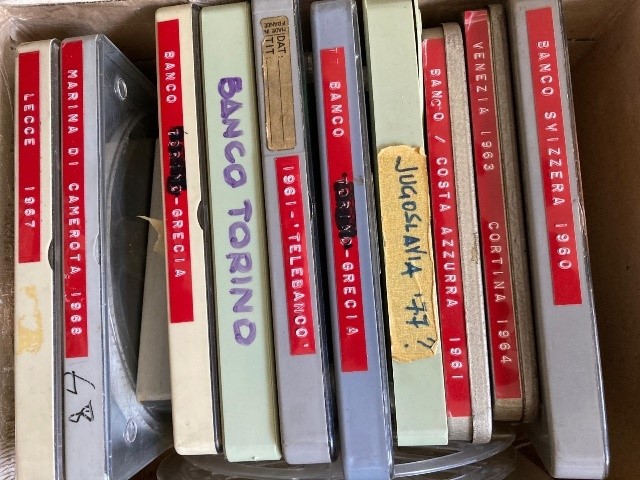
The people who were willing to participate and donate the films have been contacted and invited to bring the film material to the Department of Linguistic and Cultural Studies, but there were also cases in which we met in homes, offices and studios, and even libraries, for delivery. These ethnographic meetings were essential not only to illustrate the meaning and modalities of the project and to allow the signing of the documentation for the consent for archiving and research, but also to get to know the stories of these objects and, consequently, those of the people who made these films and those who are the protagonists. What is valuable are not only the words that animated these interviews, but also the manner and state of mind in which the films were handed over: some cried remembering a family member who had passed away, while others admitted that they had never watched the films made by their parents; some scrupulously explained the content of each reel, while others had absolutely no recollection of what was on it; some brought all the material at the first meeting, while others, after the initial enthusiasm, decided not to proceed with the hand-over, fearing the adverse reaction of the family. The recollection of anecdotes, family dynamics, places and ties allowed various themes relevant to anthropological research to emerge, to be explored in greater depth during the subsequent stages. How does cultural anthropology interrogate home movies? The collection of memories on film involved concurrent ethnographic research throughout the development of the project. How do we stay in the field when the ethnographic objects are home movies? What overflows from the film frame?
INDEXING | September-November 2024
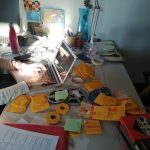
During this phase, a fund with a code was created for each participant to allow quick recognition of personal details for archiving and preservation.
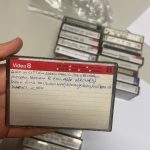
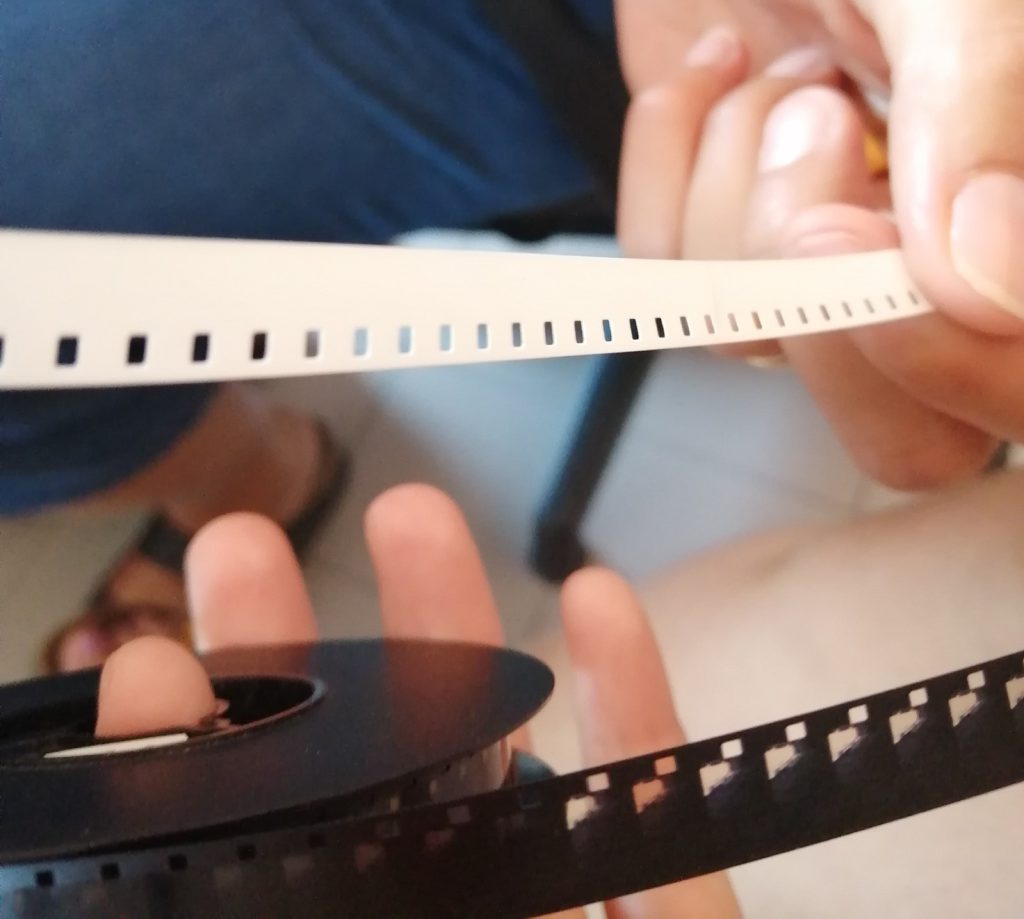
All films were labelled, numbered and described in terms of their physical particularities and content. 334 films were stored in numbered boxes awaiting the next stage, namely the digitisation of a part according to the interests and purposes of the project by Home Movies the National Archive of Family Films.


RESTORATION AND DIGITISATION
With the involvement of the Home Movies Foundation
INTERNATIONAL CONFERENCE
Amateurship and Visual Archives: a Possible Ethnography of Images
Aula B.04 – Dipartimento Studi Linguistici e Culturali, Largo S. Eufemia 19 – Modena

VISUAL ESSAY TRAILER
“Che fortuna averti incontrato”
by Vittorio Iervese e Federico Sigillo
GALLERY